
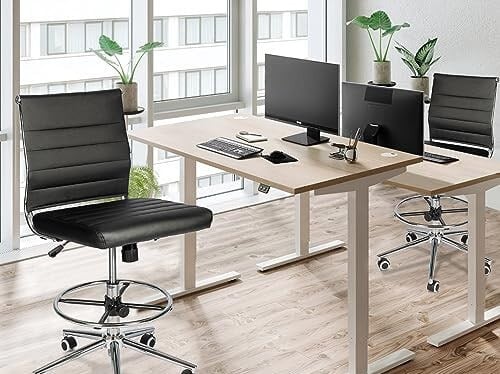
What Is a Drafting Chair? The Complete Guide to Elevated Seating
December 29th, 2025 | Office Furniture Blog
If you’ve ever walked into an architect’s studio or a modern office with standing desks, you’ve probably noticed chairs that look unusually tall. These aren’t oversized office chairs—they’re drafting chairs, and they serve a very specific purpose that’s becoming increasingly relevant in today’s diverse workspaces.
Whether you’re setting up a standing desk, working at a high counter, or simply curious about this specialized seating, understanding what makes a drafting chair unique will help you determine if it’s the right solution for your workspace needs.
Understanding the Basics: What Exactly Is a Drafting Chair?
A drafting chair, also known as a drafting stool or architect’s chair, is a specialized type of seating designed to provide comfortable support when working at elevated surfaces. Unlike standard office chairs that typically adjust to a maximum seat height of around 21 inches, drafting chairs can extend from 24 to 34 inches or even higher, allowing users to work comfortably at drafting tables, standing desks, or elevated counters.
The key distinction isn’t just the height—it’s the entire ergonomic design that accommodates working in an elevated position. A drafting chair maintains all the supportive features you’d expect from quality seating while solving the unique challenges that come with perching at greater heights.
The Essential Footrest: More Than Just an Add-On
The most immediately recognizable feature of any drafting chair is the footrest ring. This circular or D-shaped support wraps around the chair’s base and serves as a critical ergonomic component, not merely a decorative feature.
When you’re seated at an elevated height, your legs would otherwise dangle uncomfortably, leading to poor circulation, leg fatigue, and lower back strain. The footrest provides a stable platform where you can rest your feet, allowing you to maintain proper posture with your thighs parallel to the floor. This positioning is essential for preventing the discomfort and health issues associated with prolonged sitting at non-standard heights.
Without this footrest, even the most comfortable elevated seat would become unbearable within an hour or two. It’s the element that transforms a tall stool into a genuinely ergonomic seating solution.
How Drafting Chairs Evolved: A Brief History
The drafting chair emerged from the technical drawing offices of the early 20th century. Architects, engineers, and designers spent countless hours hunched over tilted drafting tables, creating detailed plans and technical drawings by hand. These professionals needed seating that could elevate them to the appropriate height while providing the stability and support necessary for precision work.
Traditional office chairs were simply too low, and basic tall stools lacked any ergonomic considerations. The drafting chair was born as a hybrid solution—combining the elevation of a stool with the comfort features and adjustability of an office chair. Over the decades, as ergonomic science advanced, drafting chairs incorporated increasingly sophisticated features while maintaining their fundamental purpose.
Key Features That Define Modern Drafting Chairs
Today’s drafting chairs share several defining characteristics that set them apart from standard seating options.
Adjustable Height Range
The pneumatic lift cylinder in a drafting chair is longer and more robust than those in standard office chairs. This extended cylinder allows for the dramatic height adjustments that define these chairs. Quality models feature smooth, reliable adjustment mechanisms that maintain their position throughout the workday without slowly sinking—a common problem with cheaper alternatives.
Reinforced Construction
Because of the increased leverage created by their height, drafting chairs require stronger construction throughout. The five-point base is typically made from reinforced materials, whether heavy-duty nylon or metal. The gas lift cylinder must handle additional stress, and the overall frame needs to maintain stability even when fully extended. This robust construction ensures safety and longevity even with daily use.
Ergonomic Back Support
While the level of back support varies significantly across models, quality drafting chairs incorporate many features found in premium office chairs. Options range from minimal backrests on basic stools to full ergonomic backs with adjustable lumbar support, tilt mechanisms, and height positioning. The right choice depends on how long you’ll be sitting and what type of work you’ll be doing.
Durable Casters and Base
The wheels on a drafting chair must support proper weight distribution while allowing smooth movement. Most models use heavy-duty casters designed for the unique stress patterns of elevated seating. The casters should roll easily across your floor type without causing instability when you shift your weight.
Who Actually Uses Drafting Chairs?
While the name suggests these chairs are exclusive to drafting work, their applications have expanded considerably beyond traditional architectural offices.
Traditional Professional Uses
Architects and engineers still rely on drafting chairs at elevated drafting tables, though much of this work has transitioned to digital formats. Laboratory technicians use them at raised lab benches where they conduct experiments and record data. Technical illustrators, CAD operators, and industrial designers all benefit from the positioning flexibility these chairs provide.
Modern Workspace Applications
The rise of standing desks has created an entirely new market for drafting chairs. Many people who embrace height-adjustable desks discover that standing continuously can be as fatiguing as sitting all day. The ideal approach involves alternating between standing and sitting, and drafting chairs make this transition seamless. When your desk is raised to standing height, a standard office chair becomes useless, but a drafting chair allows you to perch comfortably at the perfect intermediate height.
Creative and Artistic Applications
Artists working at standing easels or large canvases find drafting chairs invaluable. They can work at eye level with their medium while conserving energy during long creative sessions. Photographers working at elevated editing stations and hobbyists with high workshop benches have also discovered the benefits of proper elevated seating.
Choosing the Right Drafting Chair for Your Needs
Selecting a drafting chair requires considering several factors beyond simply finding one that adjusts high enough.
Quality of the Pneumatic Cylinder
The gas lift mechanism is the heart of any adjustable chair. Cheaper cylinders can fail within months, leaving you stuck at one height or causing the chair to sink gradually during use. Investing in a chair with a quality pneumatic system pays dividends in reliability and longevity.
Footrest Position and Stability
The footrest should be positioned at a height that feels natural when you’re comfortably seated. It should be sturdy enough that you can push against it without feeling unstable. Some models feature adjustable footrests, which can be beneficial if multiple people of different heights will use the chair.
Seat and Back Materials
The covering material significantly affects long-term comfort. Breathable mesh backs prevent overheating during extended sessions, while padded fabric seats provide superior cushioning compared to vinyl. However, vinyl is easier to clean in environments where spills are likely. Consider your specific work environment when making this choice.
Additional Ergonomic Features
Features like 360-degree swivel capability, adjustable armrests, and tilt mechanisms can dramatically improve comfort during long working sessions. However, these additions increase cost, so prioritize based on how much time you’ll actually spend in the chair.
The Standing Desk Connection: Why Drafting Chairs Matter More Than Ever
The explosion in standing desk popularity has breathed new life into the drafting chair market. Health-conscious workers have embraced the benefits of standing while working, but many quickly discover that standing all day brings its own set of problems—foot fatigue, leg soreness, and lower back discomfort.
The solution isn’t choosing between sitting and standing but alternating between the two throughout your workday. This is where drafting chairs excel in modern offices. They provide a “perching” option that keeps you more upright and engaged than traditional sitting while giving your legs periodic relief from supporting your full weight.
Many ergonomics experts now recommend the 20-8-2 rule: for every 30 minutes at your standing desk, sit for 20 minutes, stand for 8 minutes, and move around for 2 minutes. A drafting chair makes the sitting portion of this cycle possible without requiring you to lower your entire desk setup.
Common Misconceptions About Drafting Chairs
Several myths persist about drafting chairs that are worth addressing.
“They’re Only for Artists and Architects”
While drafting chairs originated in technical drawing offices, their applications have expanded far beyond these traditional roles. Anyone working at an elevated surface can benefit from proper elevated seating, regardless of their profession.
“A Tall Bar Stool Works Just as Well”
Bar stools lack the ergonomic features, adjustability, and stability that drafting chairs provide. While a bar stool might work for brief periods, it’s inadequate for extended working sessions where proper support matters.
“They’re Uncomfortable for Long Periods”
A quality drafting chair with proper ergonomic features can be just as comfortable as a standard office chair when used correctly. The key is choosing a model with adequate support features rather than settling for a basic stool design.
Making the Investment: Is a Drafting Chair Right for You?
Deciding whether to invest in a drafting chair comes down to your specific workspace setup and needs. If you regularly work at surfaces elevated above 30 inches—whether that’s a standing desk, drafting table, high counter, or lab bench—a drafting chair isn’t a luxury but a practical necessity.
The health implications of improper seating at elevated heights are real and cumulative. Poor circulation, back strain, and leg fatigue compound over time, potentially leading to chronic discomfort or injury. A quality drafting chair addresses these issues by providing proper support at the height where you actually work.
For those investing in standing desk setups, consider the drafting chair as an essential component of the system rather than an optional accessory. The ability to alternate between standing and elevated sitting throughout your day will significantly impact your comfort, productivity, and long-term physical wellbeing.
Conclusion
A drafting chair is far more than just a tall office chair. It’s a specialized ergonomic solution designed to solve specific challenges that arise when working at elevated surfaces. From its essential footrest to its reinforced construction and extended height range, every aspect of a drafting chair’s design serves a purpose.
Whether you’re an architect maintaining traditional drafting practices, a modern office worker embracing standing desk culture, or anyone else who regularly works at non-standard heights, understanding what a drafting chair offers helps you make informed decisions about your workspace setup. The right elevated seating can transform uncomfortable perching into productive, comfortable work sessions that support rather than strain your body.
In an era where we’re increasingly conscious of workplace ergonomics and the health implications of how we sit, the drafting chair represents a thoughtful solution to challenges that standard seating simply cannot address. For the right applications, it’s an investment in comfort, health, and productivity that pays dividends every working day.
Other Related Blog Posts
The Complete Guide to Standing Desks
Best Reception Desks for Small Spaces
LATEST POSTS
Ergonomic Desk Setup: A Step-by-Step Guide to a Pain-Free Workspace
February 28th, 2026 | Office Furniture Blog
If you spend six or more hours a day at a desk, your setup is either supporting your body or slowly working against it. Neck stiffness, lower back pain, sore wrists. These aren’t just minor annoyances. They’re signs that your workstation needs attention. An ergonomic desk setup aligns your furniture, equipment, and posture so you…
Read MoreHow to Design the Perfect Office Workstation (Without Breaking the Bank)
February 18th, 2026 | Office Furniture Blog
Setting up a functional office workspace doesn’t have to cost a fortune. Whether you’re outfitting a home office or a full commercial space, investing in the right office workstations can make a huge difference in productivity and your budget. Here’s what to consider when designing your ideal setup. Start With the Right Desk The desk…
Read MoreYour Buying Guide to Choosing the Perfect Office Tables
February 11th, 2026 | Office Furniture Blog
Selecting the right office tables is one of the most important decisions you’ll make when designing a workspace. These essential pieces of furniture form the backbone of your office environment, directly influencing productivity, comfort, and even employee morale. With so many styles, materials, and configurations available, finding the perfect fit can feel overwhelming. This comprehensive…
Read More