
Gaming Chair vs. Office Chair: What’s the Difference?
July 17th, 2026 | Office Furniture Blog
The short answer: gaming chairs are designed for aesthetics and marketing. Office chairs are designed for the human body during extended sitting. If you work at a desk for six or more hours a day, that difference matters more than most people realize before they buy.
We get asked about this at Arenson regularly, usually by someone who bought a gaming chair thinking the aggressive ergonomic branding meant it was built for serious desk work, and now their back disagrees. This post gives you the honest comparison so you don’t make the same call.
What Gaming Chairs Are Actually Built For
Gaming chairs are designed around console gaming: a reclined posture, often at a low seat height, in front of a screen positioned lower than a standard monitor setup. The bucket seat shape, the bold colors, the racing-style side bolsters, all of it comes from automotive racing seat design, not ergonomic research.
They look purposeful. The branding uses words like “lumbar support” and “ergonomic.” But the bolsters that give gaming chairs their signature shape actively restrict natural hip movement, and the fixed or semi-fixed lumbar pillow that comes strapped to the back is not adjustable in any meaningful way. For occasional gaming sessions in a reclined position, they’re fine. For an upright working posture over a full workday, they consistently fall short.
What Office Chairs Are Actually Built For
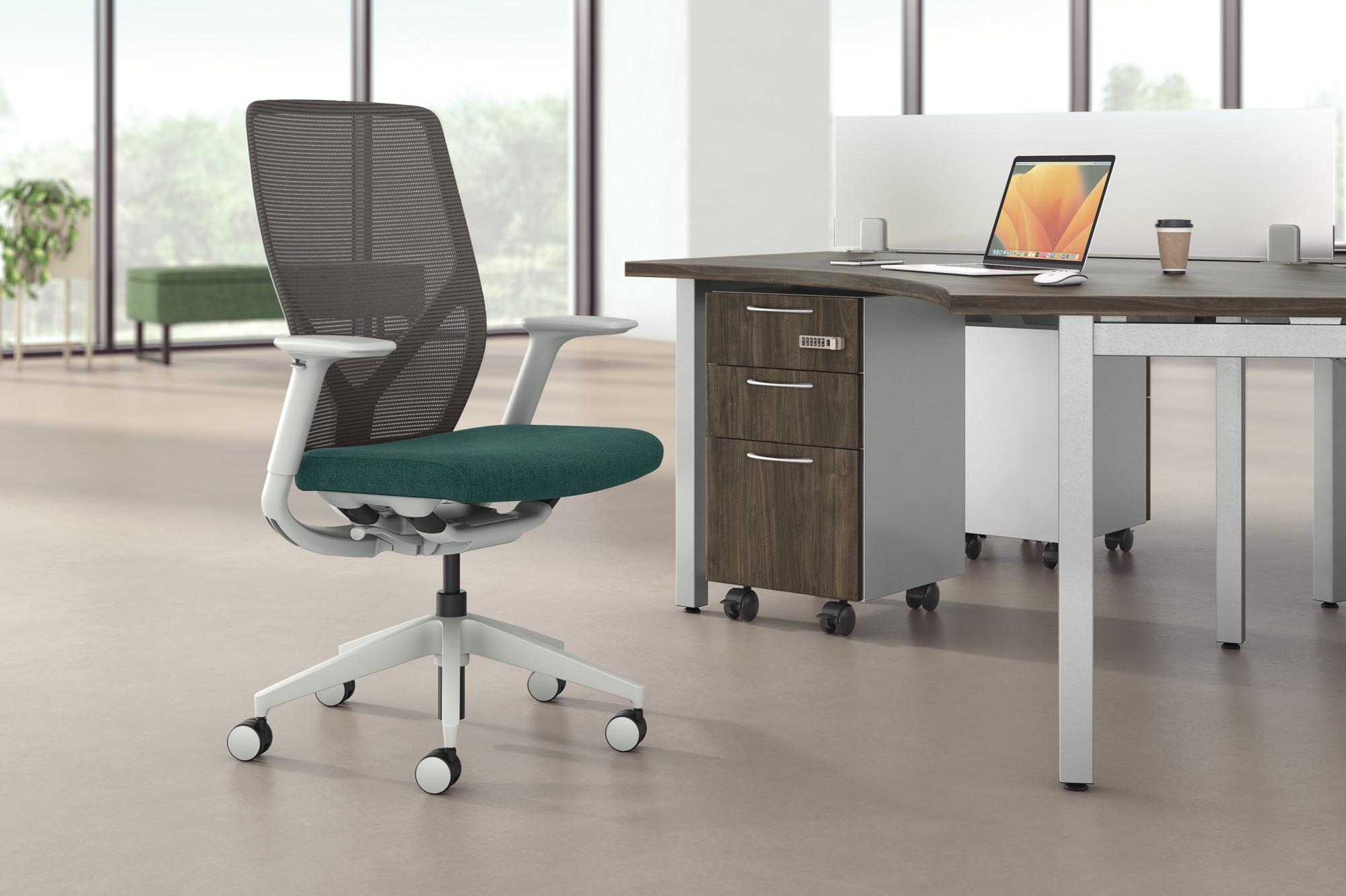
A well-designed office chair is engineered around one specific problem: keeping the human spine in a supported, neutral position during sustained upright sitting. That requires adjustability at multiple points, because bodies differ and postures shift throughout the day.
The office chair features that actually matter for full-day desk work are adjustable lumbar support (height and depth, not a pillow tied to the back), seat depth adjustment so the chair fits different leg lengths, armrests that adjust in height and width to keep shoulders relaxed, and a recline mechanism that moves with the user rather than locking them in one position.
These aren’t premium add-ons. They’re the functional minimum for a chair someone will sit in for eight hours.
The Specific Differences Side by Side
Lumbar support: Gaming chairs use a separate foam pillow strapped to the backrest. It sits wherever the strap holds it, which is often not where your lumbar curve actually is. Commercial office chairs have integrated, adjustable lumbar mechanisms built into the backrest structure that can be positioned precisely where your spine needs contact.
Seat shape: Gaming chairs use a bucket seat with raised side bolsters. These look supportive but restrict the natural micro-movements your hips and pelvis make throughout the day, which increases fatigue over long sessions. Office chairs use a more open seat pan that allows natural movement and distributes weight more evenly.
Seat depth: Most gaming chairs have a fixed seat depth sized for a general average. If your legs are longer or shorter than that average, the chair either cuts into the back of your knees or leaves you without lumbar contact. Adjustable seat depth in an office chair solves this directly.
Adjustability range: A quality office chair has six to eight meaningful adjustment points. Most gaming chairs have three or four, with the most important ones (lumbar depth, seat depth, armrest width) either absent or fixed.
Durability under daily professional use: Gaming chairs are rated for recreational use. Commercial-grade office chairs from brands like HON, Nightingale, and 9to5 Seating are BIFMA-certified, meaning they’ve been tested to withstand the demands of full-time professional use over years, not gaming sessions.
Who Should Buy a Gaming Chair
Someone who games recreationally and wants a seat that fits that posture and aesthetic. That’s a legitimate use case and gaming chairs serve it reasonably well.
Who Should Not Buy a Gaming Chair
Anyone who works at a desk full time and is using a gaming chair as a substitute for a proper ergonomic office chair. The marketing overlap between the two categories has created a lot of confusion, and back pain tends to be what clarifies it eventually.
What to Look for Instead
If you’re spending most of your workday at a desk, the chair investment worth making is a commercial-grade ergonomic task or executive chair with genuine adjustability. You don’t need to spend $1,500 to get there. There are solid options at multiple price points that outperform any gaming chair for professional seated work.
At Arenson, we carry task chairs, executive chairs, and ergonomic seating from commercial brands built specifically for full-day desk use. Our office chair selection covers a range of budgets, and if you’re not sure which category fits your situation, our complete office chair buying guide walks through how to choose by use case rather than appearance.
If back pain is already part of the conversation, our post on office chairs with lumbar support covers what adjustable lumbar actually means in practice, and are ergonomic office chairs worth the cost makes the case in concrete terms.
The bottom line: if you work at a desk, buy a chair designed for that. Gaming chairs are built for a different posture, a different use case, and a different amount of daily sitting. They look the part, but the body keeps score.
LATEST POSTS
Breakroom & Employee Lounge Furniture Ideas That Support Retention
August 10th, 2026 | Office Furniture Blog
Most companies treat the breakroom as an afterthought. A fridge, a folding table, a few mismatched chairs, done. But the breakroom is one of the only spaces in the office where employees are not performing for anyone. That makes it one of the most honest signals of how a company actually treats its people, and…
Read MoreLaw Office Furniture: Essential Pieces for a Professional Practice
July 27th, 2026 | Office Furniture Blog
Clients judge a law firm before an attorney ever says a word. The reception desk, the conference table, the chair a client sits in while discussing a divorce or a lawsuit: every piece sends a signal about competence, discretion, and trust. For a legal practice, furniture isn’t decor. It’s part of the case for hiring…
Read MoreGaming Chair vs. Office Chair: What’s the Difference?
July 17th, 2026 | Office Furniture Blog
The short answer: gaming chairs are designed for aesthetics and marketing. Office chairs are designed for the human body during extended sitting. If you work at a desk for six or more hours a day, that difference matters more than most people realize before they buy. We get asked about this at Arenson regularly, usually…
Read More