
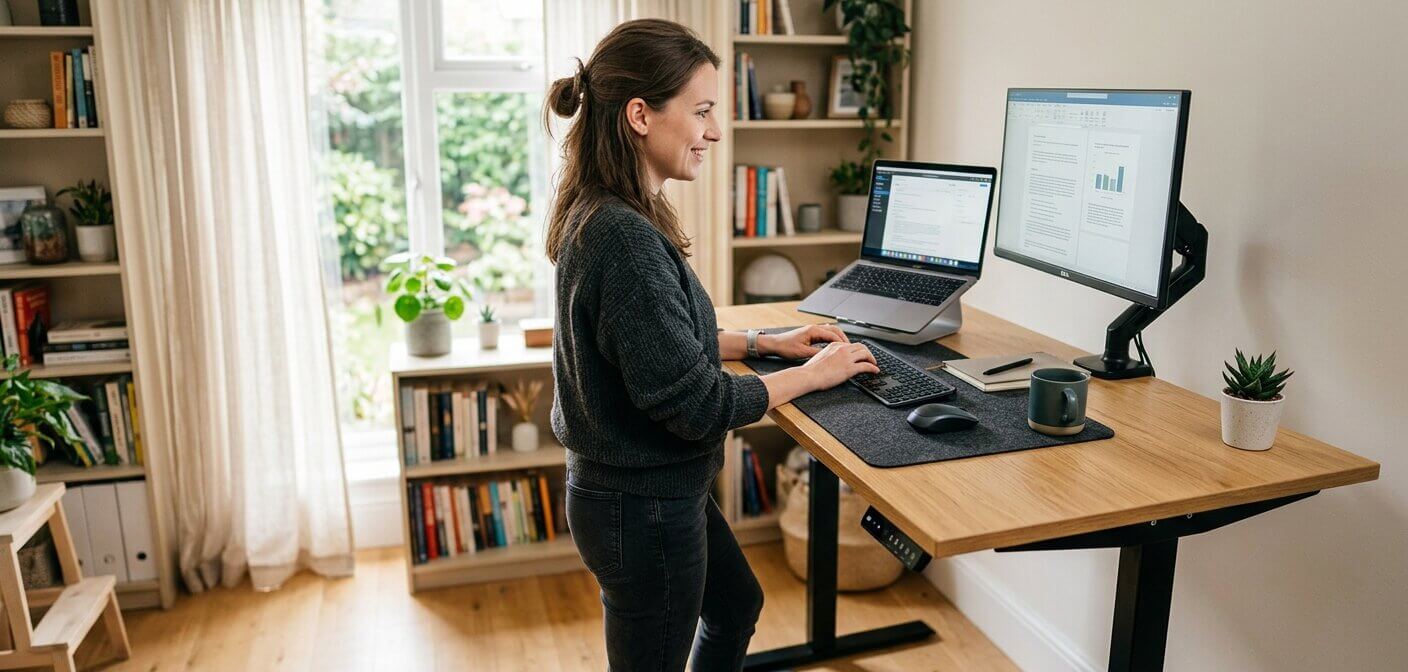
What Is a Standing Desk? Benefits, Types & Everything You Need to Know
April 22nd, 2026 | Office Furniture Blog
Standing desks have gone from a niche office trend to a mainstream productivity tool, and for good reason. If you’re wondering whether one is right for you, this guide breaks down exactly what a standing desk is and why it might be the best upgrade you make to your workspace.
What Is a Standing Desk?
A standing desk (also called a stand-up desk or height-adjustable desk) is a desk designed to let you work comfortably while standing upright. Most modern versions are sit-stand desks. They adjust in height (manually or electrically) so you can switch between sitting and standing throughout the day.
They come in several formats:
- Electric/motorized desks – Adjust at the push of a button. The most convenient option.
- Manual/crank desks – Height is adjusted by hand. More affordable.
- Fixed standing desks – Set at one height, no adjustment. Less common.
- Desktop converters – Sit on top of your existing desk and raise your monitor/keyboard.
If you’re ready to invest in one, check out the standing desks available at Arenson. We provide a solid range for every budget and workspace.
7 Key Benefits of Using a Standing Desk
1. Reduces Back and Neck Pain
Prolonged sitting compresses the spine and tightens hip flexors, leading to chronic lower back and neck pain. Standing desks encourage a more neutral posture and allow you to shift positions regularly, which is one of the most effective ways to reduce musculoskeletal discomfort.
2. Burns More Calories
Standing burns roughly 50% more calories than sitting. It’s not a substitute for exercise, but over a full workday it adds up. For a sedentary office worker, this small change can make a meaningful difference in long-term weight management.
3. Lowers Risk of Chronic Disease
Sitting for extended periods is linked to increased risks of cardiovascular disease, type 2 diabetes, and metabolic syndrome (even in people who exercise regularly). Breaking up long sitting periods with standing helps keep blood sugar levels stable and reduces these risks.
4. Boosts Energy and Mood
Many standing desk users report feeling more alert, energized, and less fatigued during the workday. Studies have found reductions in fatigue, tension, and depression with regular sit-stand work routines. Less afternoon slump, more output.
5. Improves Productivity and Focus
Standing naturally promotes a more active, engaged state of mind. Users often report feeling more “on” while standing. They are also able to concentrate better on tasks and stay in a working flow. For deep work sessions or calls, standing can sharpen focus noticeably.
6. Promotes Better Posture
Sitting encourages slouching. A properly set-up standing desk, combined with a good monitor position, trains you to stand taller and hold your core more actively. Over time, this can improve overall posture, not just while working, but throughout the day.
7. Increases Longevity
Research has linked excessive sitting with a shorter lifespan, independent of other lifestyle factors. Regularly breaking up sitting time is associated with lower all-cause mortality. A standing desk is, quite literally, an investment in living longer.
How Long Should You Stand?
The goal isn’t to stand all day. That’s just as bad as sitting all day. The current recommendation from ergonomics experts is to alternate every 30–60 minutes between sitting and standing. A simple rule: stand for 15–30 minutes per hour.
Use a timer or a smart desk with memory presets to remind you to switch.
Conclusion: Is a Standing Desk Worth It?
If you work at a desk for more than 4 hours a day, a standing desk is a worthwhile investment. The health benefits are well-documented, setup costs have become increasingly accessible, and the productivity gains speak for themselves.
For high-quality options that fit any workspace, explore the standing desk collection at Arensonof.
Also, the best standing desk is the one you’ll actually use. Start with short standing intervals, build the habit, and your body and productivity will thank you.
Related Blog Articles
The Complete Guide to Standing Desks
10 Health Benefits of Adjustable Standing Desks
LATEST POSTS
How to Adjust Your Office Chair (Step by Step)
September 5th, 2026 | Office Furniture Blog
Most people set their chair height once on day one and never touch another lever. That’s a shame, because a good ergonomic chair has five or six adjustments, and each one is doing a specific job. Get them in the right order and the chair starts holding you up instead of the other way around….
Read MoreBreakroom & Employee Lounge Furniture Ideas That Support Retention
August 10th, 2026 | Office Furniture Blog
Most companies treat the breakroom as an afterthought. A fridge, a folding table, a few mismatched chairs, done. But the breakroom is one of the only spaces in the office where employees are not performing for anyone. That makes it one of the most honest signals of how a company actually treats its people, and…
Read MoreLaw Office Furniture: Essential Pieces for a Professional Practice
July 27th, 2026 | Office Furniture Blog
Clients judge a law firm before an attorney ever says a word. The reception desk, the conference table, the chair a client sits in while discussing a divorce or a lawsuit: every piece sends a signal about competence, discretion, and trust. For a legal practice, furniture isn’t decor. It’s part of the case for hiring…
Read More